On January 10, 2025, multiple articles announced that the film ARMOR would be the first feature film to be dubbed entirely using artificial intelligence (AI). This claim has generated significant attention, 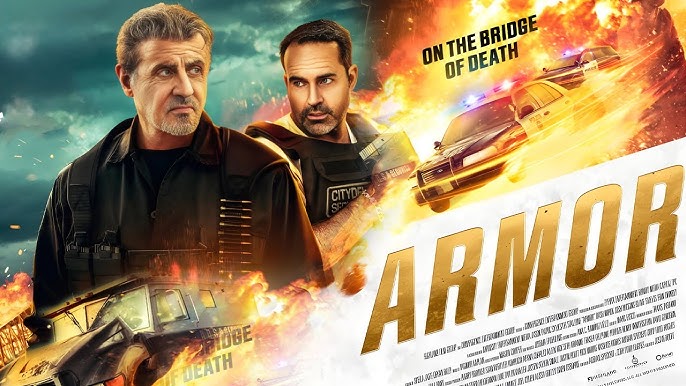 particularly in France, as the AI dubbing involved recreating the iconic voice of Alain Dorval, the legendary French actor known for dubbing Sylvester Stallone. Permission for this test was granted by Dorval’s daughter, Aurore Bergé, a current member of the French government.
However, this widely-publicized announcement requires clarification. The AI dubbing test was conducted only on the trailer of the film ARMOR, not the full feature. While the project showcases advancements in AI voice synthesis, the results have received mixed reviews, with many questioning whether AI alone can match the quality of human dubbing.
The State of AI Dubbing in 2025
AI-powered dubbing has been making waves in the film industry for almost two years. In fact, we at BZZ VIDEO have been dubbing feature films with the help of AI for over a year, which means that ARMOR wouldn't be the first AI-dubbed movie by a long shot.
The ARMOR trailer featuring the AI-generated voice of Alain Dorval, as produced by ElevenLabs, has disappointed viewers who rushed to watch it the very day it was released online. While the synthesized voice captures some of Dorval’s recognizable characteristics, the overall performance lacks the subtlety and depth that human voice actors bring to a role.
By contrast, our company has conducted its own tests with the help of AI, leveraging a hybrid approach that combines cutting-edge technology with human expertise in dubbing. We use people of experience, who know how to handle the adaptation of dialogue, evaluate the quality of the generated voices, and provide a well-balanced sound mix with the appropriate effects. This ensures higher audio quality and emotional authenticity, even when recreating iconic voices.
You will find both versions below: the first one has been produced by Eleven Labs, and the second one by our company BZZ VIDEO, using a similar technology.
The Ethical Implications of AI Voice Recreation
Recreating the voice of Alain Dorval, who passed away recently, adds a layer of ethical complexity to the use of AI in dubbing. Although Aurore Bergé authorized the test using her father's voice, it raises important questions:
- How should the voices of deceased actors be used in future projects?
- Who owns the rights to an actor’s voice after their death? Is it public domain or is the family entitled to its use? Can money be made out of a deceased person's voice?
- Does AI voice synthesis risk dehumanizing the artistry of dubbing?
Projects like the ARMOR trailer illustrate both the promise and challenges of AI voice cloning. While it can serve as a touching tribute, the technology must be used with caution to respect the legacy of the original performer.
Does AI Dubbing Replace Human Creativity?
The results of the ARMOR trailer test suggest that AI alone is not yet sufficient to replace human work 100%. Although AI dubbing tools have become more advanced, they still struggle with nuances such as cultural adaptation, timing, and the emotional impact of the dialogue. Fine-tuning these elements still requires human know-how and personality.
Moreover, dubbing a trailer is one thing; dubbing an entire feature-length film to a high standard is a far more complex task. AI excels at automating repetitive tasks and mimicking certain characteristics, but the artistic added value of a human input remains indispensable to this day.
AI Dubbing: The Future of Film Localization?
The buzz surrounding ARMOR and its AI-dubbed trailer underscores the growing interest in artificial intelligence as a tool for film localization. However, it’s clear that the technology is not yet ready to dub a movie automatically. Instead, the best results come from a collaboration between AI and human creativity. We provide such services for feature films, short films, documentaries and TV episodes.
.jpg) Dubbing a full feature film or a video game takes time and hard work, even with the help of AI. However, it can now be done in far less time and for far less money than a traditional dubbing. Is the result equivalent? As of January 2025, not yet. If done right, an audience will be entertained and will not suspect that they are hearing AI-generated sounds, but if they compare it to a man-dubbed version, they will be able to tell. Which is why big budget movies should probably stick to recording human performances for at least a few months, while mid-to-low budget movies take advantage of AI dubbing to conquer new markets and tell their story to foreign audiences. But in a year's time? There will be no objective reason to resist AI dubbing anymore.
Dubbing a full feature film or a video game takes time and hard work, even with the help of AI. However, it can now be done in far less time and for far less money than a traditional dubbing. Is the result equivalent? As of January 2025, not yet. If done right, an audience will be entertained and will not suspect that they are hearing AI-generated sounds, but if they compare it to a man-dubbed version, they will be able to tell. Which is why big budget movies should probably stick to recording human performances for at least a few months, while mid-to-low budget movies take advantage of AI dubbing to conquer new markets and tell their story to foreign audiences. But in a year's time? There will be no objective reason to resist AI dubbing anymore.
If you’re curious about the potential of AI dubbing, we encourage you to compare the results of the ARMOR trailer delivered by ElevenLabs with our own hybrid tests. The technology holds incredible promise, but as of now, human expertise in the audio field remains essential to deliver the high-quality dubbing that audiences deserve.
By addressing both the ethical and practical implications of AI dubbing, we can ensure that the future of this technology enhances, rather than diminishes, the art of storytelling.